
Creative entrepreneurs often discover that the hardest part isn’t the craft, it’s the business challenges for creatives that pile up around it. When pricing, client expectations, and daily admin feel unclear, that friction turns into creative business stress that blurs focus and drains momentum. Plenty of talented makers, designers, writers, and artists share the same creative professional pain points: too much noise, not enough clarity, and the quiet fear that the business is starting to run the art. The goal is simple systems that protect energy and support maintaining creative spark.
Quick Summary of Key Takeaways
Use clear pricing strategies to charge confidently and protect your creative energy.
Use basic contracts and invoices to set expectations and get paid smoothly.
Use a lightweight workflow to deliver projects reliably without overcomplicating your process.
Use simple financial tracking essentials to understand cash flow and make better decisions.
Use authentic marketing and firm time boundaries to grow sustainably while staying true to your art.
Understanding the System Behind Sustainable Creativity
A simple business system is a set of repeatable choices that protect your art while keeping money and expectations clear. It starts with pricing that fits your real effort, basic contracts that define scope, and a workflow that prevents chaos. Then you market in a way that feels like you, and only after you clarify your risks and goals do you compare structures like an LLC in plain English, including references like Simple LLCs.
This matters because unclear pricing and fuzzy boundaries quietly drain creative energy. When your process is visible, you can say yes with confidence, and no without guilt. Even small benchmarks like hourly pricing punishes efficiency can change how you value your growing skill.
Imagine you are producing a podcast series with a collaborator, sponsors, and guest releases. Your workflow sets deadlines, your contract sets revision limits, and your pricing reflects the real hours, using authentic Instagram engagement as a reality check for promo expectations.
Clarify → Build → Run Your Creative Business Rhythm
Your goal is not to “optimize” creativity. It is to build a light, repeatable rhythm that keeps agreements, cash flow, and communication predictable so your attention can stay on the work. Think of it as project management for creatives: a way to move from idea to delivery while still protecting the quality of what you make.
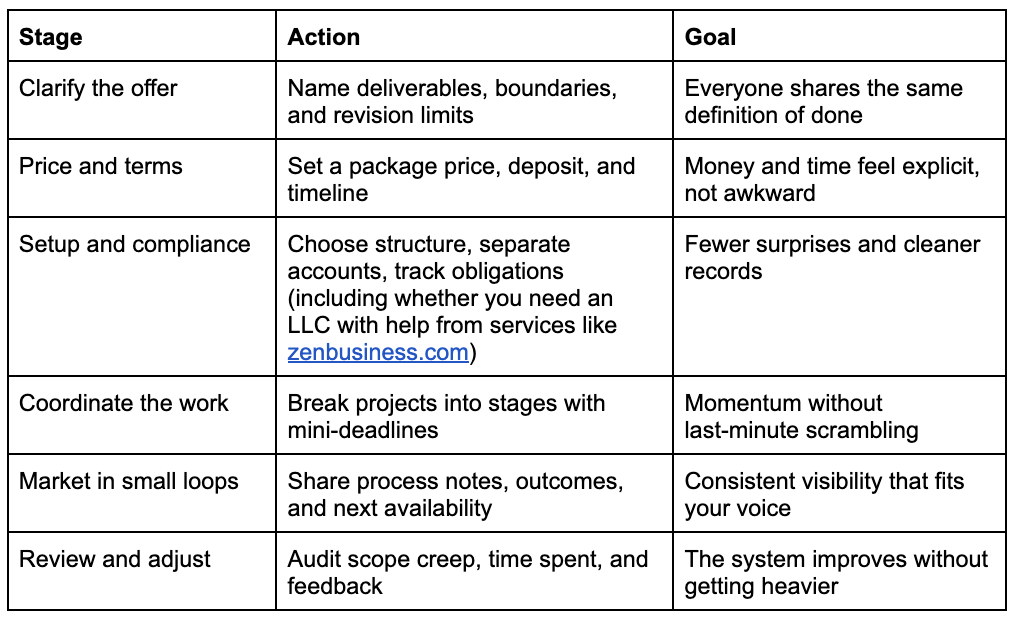
Run the first three stages once at the start of a season, then cycle through the last three every week. Over time, the review step trains your pricing, boundaries, and marketing to reflect reality rather than optimism.
Habits That Keep Your Art and Business in Sync
Habits matter because they turn abstract intention into a lived rhythm, especially when your work spans mediums, collaborations, and long timelines. Done lightly, these practices keep your boundaries and follow-through consistent so your curiosity stays pointed at the craft, not the chaos.
Two-Sentence Scope Check
What it is: Write the “done” definition and one out-of-scope line before starting.
How often: Per milestone
Why it helps: It prevents vague expectations from quietly expanding your workload.
Deposit Before Draft
What it is: Confirm payment and start only after the deposit clears.
How often: Per project
Why it helps: It stabilizes cash flow and signals mutual commitment.
Weekly Pipeline Postcard
What it is: Send one update to each client: status, next step, and date.
How often: Weekly
Why it helps: It reduces anxiety and stops follow-ups from interrupting creative flow.
Monthly Business Review
What it is: Run monthly business reviews on money, time, and satisfaction.
How often: Monthly
Why it helps: It turns lessons into improvements you can repeat, not just remember.
Capacity Map for Concurrent Work
What it is: List active projects and limit your week to 2 to 5 projects at once.
How often: Weekly
Why it helps: It protects depth by making tradeoffs visible.
Build Simple Systems That Grow With Your Creative Work
It’s tough to stay devoted to your art when the business side feels messy, inconsistent, or always stealing your time. The answer isn’t more hustle, it’s choosing a few foundational business practices, then letting business system evolution happen through steady, lightweight reviews. When the basics are handled, creative entrepreneurship confidence rises, and creative career growth feels supported instead of chaotic. Simple systems protect your creativity while your business grows. Choose your starter toolkit now, then revisit it once a month to keep what’s working and refine what isn’t. That’s how sustainable structure leads to long-term creative success with more stability, resilience, and room to make your best work.