Subscribe on your favorite platform: Apple Podcasts | Spotify | YouTube
The enduring tale of Frankenstein has consistently captured the imagination of readers and thinkers alike. With its roots planted deeply in the Romantic period, Mary Shelley's iconic narrative transcends time, serving as a potent allegory for our contemporary concerns, especially as we stand on the cusp of an age defined by artificial intelligence.
The Cinematic Lens: Del Toro’s Interpretation
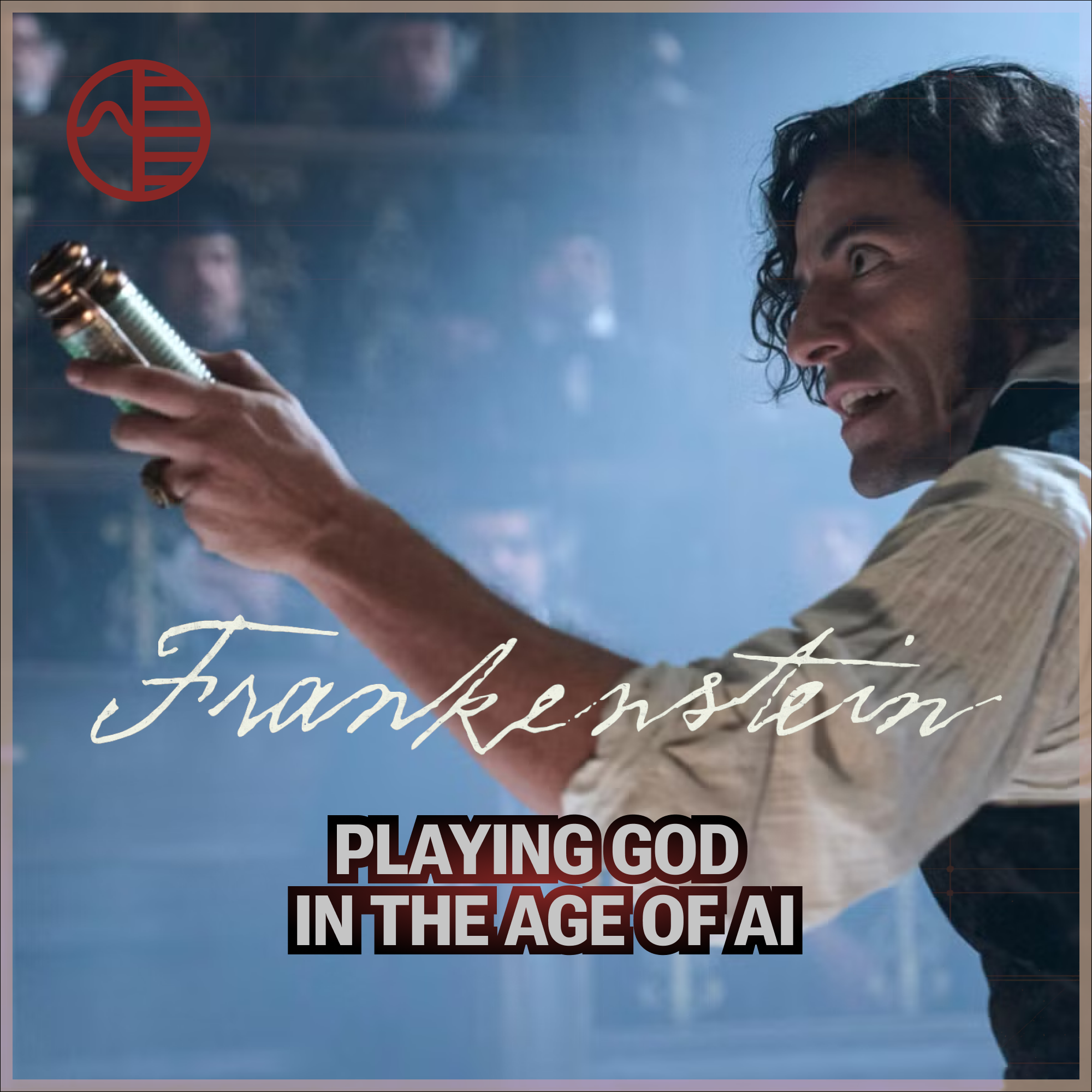
In recent cinematic interpretations, like Guillermo del Toro's rendition, Frankenstein's themes of creation, science, and ethical boundaries are vividly explored. Del Toro diverges from past corny or modern renditions, creating a film closely aligned with Shelley's original symbolism. His unique approach is marked by dream sequences and symbolic imagery that connect deeply with the source material. This adherence to the essence of Frankenstein draws audiences back to Shelley's critical questions: What are the responsibilities of the creator towards their creation?
A Matter of Perspective: Rationality Versus Humanity
The exploration of Frankenstein's narrative uncovers a broader discourse on rationality versus humanity. Set in a period marked by both intense optimism about science and emerging skepticism of purely rational pursuits, the tale criticizes the over-reliance on logic devoid of ethical or emotional considerations. The narrative reveals how overbearing rationality can lead to catastrophic consequences, as in the case of Victor Frankenstein, who fails to recognize the grotesque nature of his endeavors.
The Historical Backdrop: Lessons from the Past
The script delves into the intellectual and historical context of the period, exploring how an era characterized by a staunch belief in rationality and scientific progress leads to both cultural achievements and eventual disaster. Germany emerges as a focal point, a bastion of learning and science, yet also embodies the dangers of unchecked rationality, foreshadowing its dark turn in the 20th century. This duality highlights the precarious balance between enlightened progress and destructive hubris, a theme mirrored in Victor Frankenstein's tragic arc.
Contemporary Parallels: AI as the Modern Monster
In drawing parallels between Frankenstein's creation and contemporary AI, the conversation shifts to the risks and responsibilities inherent in today's technological advancements. Just as Frankenstein grappled with the implications of his monstrous creation, modern society faces similar dilemmas with AI: What ethical considerations arise when creating something that might one day surpass human control or understanding?
As AI technology progresses, it raises concerns reminiscent of the paperclip problem or the Faustian bargain—situations where ambition outstrips caution, leading to potential unforeseen consequences. The emphasis on creating AI as rational entities echoes the Enlightenment's quest for pure knowledge but also warns against losing sight of the human element, the intuitive and ethical dimensions, that should guide such innovations.
The Future at a Crossroads: Navigating Technological Progress
The narrative of Frankenstein continues to resonate as a cautionary tale against unchecked human will over nature. In today's landscape dominated by AI development and technological upheaval, Shelley's story serves as a powerful reminder of the importance of balance and the need to integrate human experience and ethical foresight into scientific pursuits. It underscores that our creations are ultimately reflections of ourselves, capable of both elevating and destroying.
As we navigate this complex web of technological progress, the story of Frankenstein urges us to pause and consider the broader implications of our actions, ensuring we do not repeat Victor Frankenstein's missteps by failing to foresee the consequences of our relentless pursuit of knowledge and power. It's a timeless call for reflection, inviting us to integrate wisdom, ethical foresight, and humanity into our advancements in AI and beyond.
Books
Frankenstein (or Frankenstein; or, The Modern Prometheus) by Mary Shelley
Against the Machine: On the Unmaking of Humanity by Paul Kingsnorth
Feminism Against Progress by Mary Harrington
Immoderate Greatness by William Ophuls
I Have No Mouth and I Must Scream by Harlan Ellison (short story)
Story Collected in this reprint Greatest Hits (Herald Classics)
Important People
Theories & Concepts
Rationality vs. intuition
Meat Lego Gnosticism
Ozymandias (poem by Percy Bysshe Shelley)
Movies/Films & TV
The Lord of the Rings (Galadriel and the Ring of Power)
Mythological Figures
Faust (legendary figure)
Golem (Jewish mythology)
Anima Mundi (world soul)
Scientific Concepts
Lateralization of brain function (left vs. right hemisphere)
Dissipative structures (physics)
Substrate independence hypothesis
Ship of Theseus problem
Paperclip maximizer (AI thought experiment)
Mary's room / Knowledge argument (philosophical thought experiment)
Scientific Studies & Experiments to Reference
Iain McGilchrist's brain hemisphere research
Left hemisphere: narrow focus, object-oriented, emotionally stunted, prone to confabulation
Right hemisphere: open, holistic, emotional understanding, empathy
Stroke patient studies with right hemisphere lesions (anosognosia - inability to acknowledge left arm paralysis)
Political ideology and heuristics study
Comparing ideologues vs. political moderates
Finding: Moderates use heuristics more; ideologues rationalize existing beliefs
Newton's alchemy research
Newton wrote more about alchemy than physics
Schizophrenia and rationality research
Observation that schizophrenics have "lost everything but their rationality."
Pure rationality without intuitive grounding leads to paranoid thinking
Show Notes:
00:00 Introduction to Frankenstein
00:03 Del Toro's Unique Approach
01:38 The Symbolism in Frankenstein
01:58 Victor Frankenstein's Early Life
04:16 Historical Context and Rationality
05:03 The Rise of German Intellectualism
08:07 Alchemy and the Myth of Faust
12:34 The Split Between Rationality and Emotion
16:54 Victor's Ambition and Downfall
21:00 The Monster's Perspective
44:05 The Paperclip Problem and Rationality
45:38 Urbanization and Its Impact
46:49 The Shift to Urban Living
47:08 The Rise of Cities Globally
48:11 Artists and Intuition
48:53 The Rationalistic Worldview
49:07 Medieval Era and Symbolism
51:24 The Decline of Spirituality
55:14 AI and the Future of Humanity
57:12 The Ethical Dilemmas of AI
01:00:16 The Power and Resource Dilemma
01:13:32 The Philosophical Implications of AI
01:29:26 The Future of Civilization
You Might Also Like: